

Why Every Student Should Learn Silambam in School
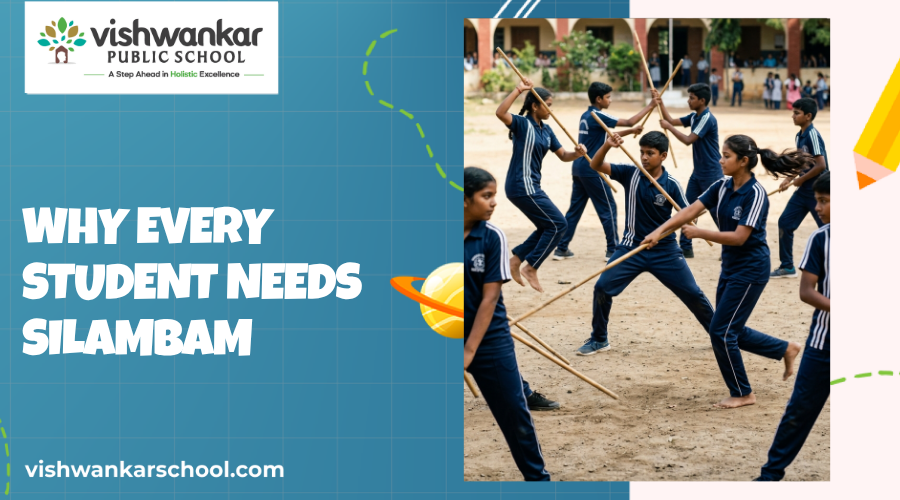
India has many amazing traditions, and Silambam is one of them. This ancient Tamil martial art has been practised for thousands of years. It is not just about fighting; it also builds physical strength, sharp focus, and a sense of cultural pride.
The majority of students today have never heard of it. The situation needs to be changed. Introducing Silambam into schools may be a powerful step toward keeping the next generation fit, focused, and connected to their roots.
What Is Silambam? History and Origin
Silambam is a traditional martial art originating in Tamil Nadu, India, with roots dating back over 5,000 years. It is one of the oldest surviving fighting systems in the world, rooted in the Sangam period of ancient Tamil culture. Texts from that era reference the art, placing its origin in the hills of Kurinji, where young warriors trained with long bamboo staves.
The word itself comes from the Tamil word ‘Silambu,’ referring to the bamboo stick used in practice. Over time, the art evolved to include footwork patterns, breathing techniques, and even animal-inspired movements. It was not just combat; it was a way of life.
Today, Silambam is recognised as a traditional sport by the Tamil Nadu government, and efforts are underway to revive it in schools and communities across the state.
Why Silambam Matters for Students Today?
In an age of smartphones, sedentary habits, and mounting academic pressure, students need more than textbooks. They need physical activity that also sharpens the mind. Silambam offers exactly that.
Unlike conventional gym workouts or sports, this martial art builds a rare combination of agility, coordination, and mental discipline simultaneously. It does not just train the body. It trains students to think quickly, move with intention, and stay calm under pressure.
For schools looking to offer something truly meaningful alongside academics, Silambam for kids is a natural fit.
Benefits of Learning Silambam in School
In addition to self-defence, Silambam has many other benefits. The following are the real benefits students gain:
- Physical Fitness – By regular practice, you can improve your stamina, flexibility, and strength. Your entire body is engaged in stick-based movements and footwork.
- Mental Focus – The art demands concentration. Students learn to stay present, track movement, and make quick decisions – skills that directly transfer to academics.
- Self-Defence – Students, especially girls, gain practical self-defence techniques rooted in a proven system that has protected communities for centuries.
- Stress Relief – Structured physical activity like this helps reduce exam anxiety and emotional pressure that students commonly experience.
- Confidence Building – Mastering a new skill, earning a grade in practice, or performing in a demonstration naturally boosts a student’s self-image.
- Cultural Connection – Learning a Tamil martial art connects students to their heritage and builds pride in their roots.
Also read: https://tamilsilambalayam.com/silambam.html
Role of Silambam in Student Development
A person’s character is built through challenges. Silambam teaches students that progress comes through practice and patience, not shortcuts. Each session reinforces discipline, respect for the instructor, and perseverance.
Students who train regularly have improved posture, better body awareness, and sharper reflexes. Moreover, they develop a sense of calm confidence that shows in the way they conduct themselves, both in classrooms and on sports fields.
The role of this martial art in shaping well-rounded students is something no academic curriculum alone can replicate.
Skills Students Gain from Silambam Practice
- Footwork and spatial awareness
- Grip strength and coordination
- Breathing control and endurance
- Teamwork through partner drills and group formations
- Respect, humility, and sportsmanship
- Goal-setting through belt or grade progression
These are not just martial arts skills. They are life skills.
Importance of Preserving Traditional Arts in Schools
Tamil Nadu has a rich legacy of traditional arts, from Bharatanatyam to Kalaripayattu to Silambam. When schools teach these arts, they do two things at once: they preserve cultural heritage, and they give students an identity rooted in something real and ancient.
In a world that is becoming increasingly uniform, knowing where you come from matters. Students who grow up learning traditional arts carry that knowledge with dignity. They become ambassadors of a culture that is thousands of years old.
Including Silambam in the school curriculum is not just about fitness. It is about identity, pride, and legacy.
Silambam vs Other Martial Arts
Many parents wonder how Silambam compares to more widely known martial arts such as karate, taekwondo, or kalaripayattu. Here is a simple breakdown:
- Karate and Taekwondo are striking-based arts with a global competition structure. They are excellent for discipline and fitness but originated in East Asia.
- Kalaripayattu is another ancient Indian martial art from Kerala, with acrobatic and weapons-based elements. It shares some similarities with Silambam.
- In Silambam, stick fighting, footwork, and rhythm take centre stage. The structured, step-by-step learning system is especially beneficial for children, as it is deeply rooted in Tamil culture.
Silambam is a martial art that offers both practical and deeply personal training to students throughout Tamil Nadu and South India.
Why Schools Should Include Silambam in Their Curriculum
Several forward-thinking schools have already begun integrating traditional martial arts into their PE programs, and the results are encouraging. Students who learn Silambam show improved attendance, better focus in class, and stronger team cohesion.
The 18 types of Silambam, ranging from basic stick patterns to advanced weapons training, mean there is always a new level to achieve. This keeps students engaged and motivated over the long term.
Schools that invest in these programs are not just teaching sport. They are building culture, character, and community.
Here’s a list of 18 types/forms in Silambam:
- Kambu (Long Stick)
- Sedikuchi (Short Stick)
- Thee Pantham (Fire Stick)
- Vaalu Veechu (Sword Techniques)
- Kedayam (Shield Combat)
- Surul Vaal (Flexible Sword)
- Kattari (Dagger Techniques)
- Irattai Kambu (Double Stick)
- Rope Weapon Techniques
- Animal-Based Movements
- Kai Vilayattu (Empty Hand Combat)
- Kuthu Varisai
- Valari (Throwing Weapon)
- Maru (Horn Weapon)
- Eetti (Spear Techniques)
- Kaaladi (Footwork)
- Varma Kalai Integration
- Performance / Choreographed Silambam
How Students Can Start Learning Silambam
Getting started is easier than most people think. All that is needed is a bamboo stick (often called a silambam stick or ‘silambam kol’), comfortable clothing, and a qualified instructor.
For students and parents in the region, enrolling in silambam classes in Coimbatore is a great first step. Many schools and training centres offer beginner-friendly batches for children of all ages, including dedicated classes for girls.
At home, beginners can start with basic grip techniques and footwork patterns before progressing to stick movements. However, learning under a certified instructor is always the recommended approach for safety and correct technique.
Effects of Not Learning Self-Defence Skills
A student who has never been taught to protect themselves is vulnerable, not just physically, but psychologically. Self-defence awareness builds a sense of agency. Students know they are capable of handling difficult situations, and that awareness alone reduces anxiety and fear.
Students who lack this foundation may feel helpless in confrontational situations or become easy targets for bullying. The purpose of teaching self-defence is not to encourage aggression. In other words, it’s about building safety, confidence, and situational awareness.
Tips to Practice Silambam Safely for Students
- You should warm up before practising – focus on your wrists, shoulders, and legs.
- Bamboo sticks should be used – never substitute with other materials.
- It is best to practice in an open, supervised space with enough space to move around.
- It is best to learn advanced techniques from a qualified instructor before attempting them on your own.
- Take breaks when you feel tired and stay hydrated.
- Never use the stick aggressively outside of training.
Key Takeaways About Silambam
- Silambam is one of the world’s oldest martial arts, rooted in Tamil culture.
- It builds physical fitness, mental focus, and genuine self-defence ability.
- It is suitable for students of all ages, including young children and girls.
- Schools that teach it are investing in culture, character, and community.
- Learning it connects students to a 5,000-year-old living tradition.
Common Misconceptions About Silambam
- ‘It is only for boys’ – False. Girls across Tamil Nadu have been practising and excelling in Silambam for generations.
- ‘It promotes violence’ – False. Like all martial arts, it teaches control, discipline, and respect above all else.
- ‘It is outdated’ – False. The footwork, coordination, and agility training in Silambam are as relevant today as ever.
- ‘It is banned in India’ – False. While there was a colonial-era restriction on certain weapons-based practices, Silambam is completely legal and is in fact promoted by the Tamil Nadu government.
Conclusion
Silambam is not a relic of the past. It is a living, breathing tradition that has everything a modern student needs: physical strength, mental sharpness, cultural pride, and practical self-defence. Schools that introduce this martial art into their programmes are offering students something truly unique: a connection to history, a tool for personal growth, and a skill they will carry for life.
If you are a parent, educator, or student wondering where to begin, now is the time. We are ready with the bamboo stick. Tradition is waiting for you.
Frequently Asked Questions (FAQs)
1. What is the cost of a silambam stick?
The cost of a bamboo silambam stick varies according to length, quality, and where you buy it. The cost of speciality training sticks from certified suppliers may be slightly higher.
2. Why is Silambam good for kids?
Silambam improves physical coordination, mental focus, and confidence in children. It also teaches discipline and respect through structured training, qualities that help students both in school and in life.
3. Why is Silambam banned in India?
Silambam is not banned in India. There were colonial-era restrictions on certain weapons, but Silambam, as a sport and martial art, is fully legal and is actively promoted by the Tamil Nadu government and various sports bodies.
4. Is Silambam good for self-defence?
Yes. Silambam teaches practical techniques for self-defence using a stick as well as empty-hand methods. It is especially effective because it emphasises awareness, footwork, and precision over brute force.
5. What is the stick used in Silambam called?
The stick used in Silambam is called the ‘Silambam kol’ or simply the Silambam stick. It is traditionally made from bamboo and is typically around 1.68 metres in length for adult practitioners.
6. How old is Silambam?
Silambam is believed to be over 5,000 years old, with references found in ancient Tamil Sangam literature. It is considered one of the oldest surviving martial arts systems in the world.
7. Which state is famous for Silambam?
Tamil Nadu is the home of Silambam. The art is deeply embedded in the culture and tradition of the state, and it has been officially recognised as a traditional sport by the Tamil Nadu government.
8. Can girls learn Silambam?
Absolutely. Silambam has no gender barrier. Many female practitioners have excelled at national and international levels. It is an excellent form of self-defence and fitness training for girls of all ages.
9. Is Silambam an Olympic sport?
Not yet, but there are ongoing efforts to get Silambam recognised at the international level. It has been featured in various national competitions and cultural events, and its global profile is steadily growing.
10. What is the difference between Silambam and Kalaripayattu?
Although both are ancient Indian martial arts, their origins and styles differ. The Silambam system originated in Tamil Nadu and focuses on stick-based combat and footwork. Kalaripayattu is a martial art that is based in Kerala and incorporates acrobatics and full-body weapons. The two are valuable, but Silambam has a distinct cultural identity rooted in Tamil culture.
11. How to learn Silambam at home for beginners?
Beginners can start at home by learning basic grip positions and footwork patterns using a bamboo stick. Watching instructional videos from certified coaches can help, but enrolling with a qualified instructor is always recommended for proper technique and safety.