

What Is CBSE Skill Education and Why It Matters for Today’s Students
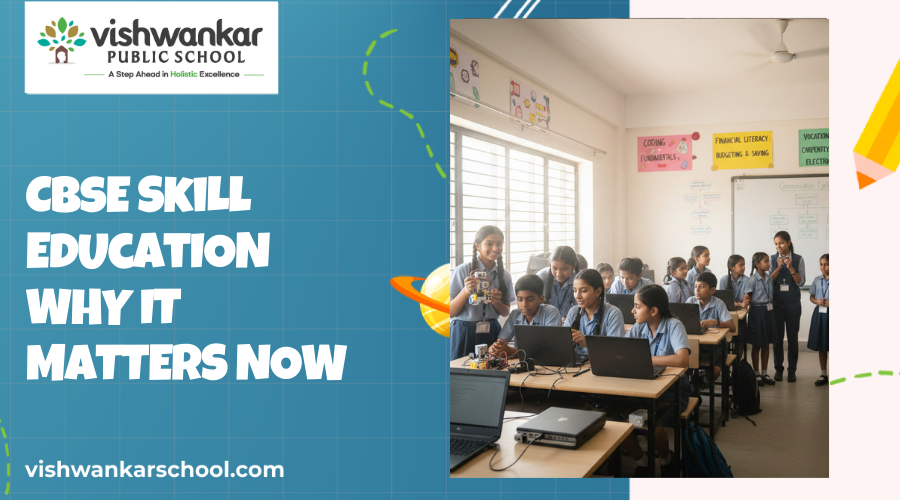
Today, choosing the right educational path involves more than just earning good grades; it also includes acquiring practical skills that prepare students for real life. Modern education is rapidly shifting from pure theory to applied learning. In this scenario, CBSE Skill Education has evolved as an organised initiative that combines academic and practical skills.
This student-friendly guide explains what skill education is, how it is implemented in classrooms, and why it is important for the future.
CBSE Skill Education
To begin with, what is Skill Education? It is a learning style that emphasises the development of practical skills, technical knowledge, and real-world competencies alongside academic study. The Central Board of Secondary Education implemented skill-based programs to provide pupils with industry-relevant knowledge from an early age.
Under the Skill Education CBSE program, students are taught subject-specific skills that enhance their employability, creativity, and problem-solving. These programs are integrated into the curriculum to ensure students gain both intellectual knowledge and practical experience.
Understanding the Purpose of Skill-Based Learning
CBSE Academic Skill Education aims to prepare students for higher education and employment prospects. Rather than limiting learning to textbooks, this model incorporates experience through projects, workshops, and simulations.
CBSE’s Department of Skill Education is responsible for designing and implementing vocational and skill-oriented subjects. These disciplines aim to support national initiatives such as Skill India, which promotes the development of industry-ready skills among youth.
Skill-based learning also enhances communication, teamwork, adaptability, and leadership skill, all of which are essential life skills necessary in today’s businesses.
What Are CBSE Skill Subjects?
CBSE Skill Subjects are designed to provide domain-specific training across a wide range of sectors. These disciplines are introduced in middle and secondary levels, depending on the school.
Some popular CBSE Vocational Subjects include:
- Information Technology
- Artificial Intelligence
- Retail
- Tourism
- Healthcare
- Financial Market Management
- Agriculture
- Media Studies
Each course blends theory and practical practice. For example, Information Technology includes digital literacy and coding fundamentals, whereas Retail covers marketing and customer service concepts.
These subject skills enable students to explore professional interests early and gain confidence in their chosen industries.
How CBSE Skill Programs Work in Schools
Schools that offer skill-based programs have specialised labs, skilled instructors, and industry-focused courses. Students learn through:
- Practical demonstrations
- Field visits
- Internship opportunities
- Project-based assessments
This structure ensures that students understand how concepts apply to real-world situations. Institutions such as the best CBSE schools in Coimbatore frequently integrate skill programs with academic disciplines to deliver a well-rounded curriculum.
The goal is not to replace traditional education, but to improve it.
Why Skill Education Matters Today?
The modern work market requires more than just academic excellence. Employers look for applicants with hands-on experience, adaptability, and industry understanding.
Here’s why skill-based education is critical:
- Career Readiness: Students are exposed to professional contexts from an early age.
- Improved Employability: Practical knowledge broadens career options.
- Entrepreneurial Mindset: Students learn how to solve problems and be innovative.
- Building Confidence: Practical experience boosts self-esteem.
- Holistic Development: Integrating academics and practical training improves overall growth.
By incorporating CBSE Skill Education into the school curriculum, children are better prepared to confront competitive exams, professional courses, and employment challenges.
Life Skills and Personal Development
Beyond technical skills, skill programs emphasise soft skills. A life skills subject component can include:
- Communication skills
- Critical thinking
- Time management
- Collaboration
- Ethical decision-making
These skills are required for both academic performance and job efficiency.
Link with National Initiatives
The skill-based curriculum is consistent with national development goals. The Skill India initiative aims to equip millions of young people with skills in real trades and emerging technologies. CBSE’s approach contributes to this aim by implementing structured skill programs at the school level.
Through collaboration with companies and training partners, the board ensures that students are exposed to current market needs.
Career Pathways After Skill-Based Education
Students who choose CBSE Skill Subjects have various options:
- Higher education in specialised fields
- Professional certifications
- Entrepreneurship
- Direct employment opportunities
For example, a student who studies Artificial Intelligence in school may later study computer science in college. Similarly, experience with Financial Market Management can lead to professions in banking and finance.
The flexibility of these programs allows students to pursue their passions without limiting their future academic opportunities.
Advantages for Students
Let’s summarise the main advantages:
- Early career exploration
- Practical learning methods
- Industry exposure
- Strong foundation for competitive exams
- Alignment with global skill standards
These advantages ensure that students are not only academically successful but also industry-ready.
Conclusion
In today’s changing educational landscape, CBSE Skill Education is critical in developing capable, confident, and career-ready students. By combining CBSE Vocational Subjects with academic instruction, students receive significant practical experience and life skills.
As education shifts to application-based learning, skill education prepares students for success in higher education, entrepreneurship, and professional careers. Students can achieve their full potential through meaningful, future-focused education when guided by structured institutions.
FAQs
1. What is skill education in CBSE?
CBSE skill education emphasises practical and vocational learning, enabling students to develop industry-relevant skills alongside academic knowledge.
2. How many skill subjects are in CBSE?
CBSE offers 20+ skill subjects across various areas, depending on class level and school facilities.
3. Why do I choose the skill subject in CBSE?
You can choose a skill subject to gain practical knowledge, boost your employability, explore career options early on, and develop real-world skills.
4. What do you mean by skill education?
Skill education is training that teaches practical abilities, technical knowledge, and life skills required for employment and daily living.
5. What are the 4 types of skills?
The four major types of skills are technical, cognitive, communication, and interpersonal (soft).
6. Who is eligible for the skill scheme in India?
Indian individuals, particularly students and youngsters seeking vocational training, are eligible for government skill development projects.
7. What is an example of skill education?
Skill education includes learning about Artificial Intelligence, Retail Management, Healthcare, and Information Technology as part of the school curriculum.
8. Can skill subjects replace language?
No, skill subjects cannot often replace core language subjects; however, they may be provided as extra or optional subjects, depending on CBSE requirements.