

Importance of Smart Classrooms in Modern Education
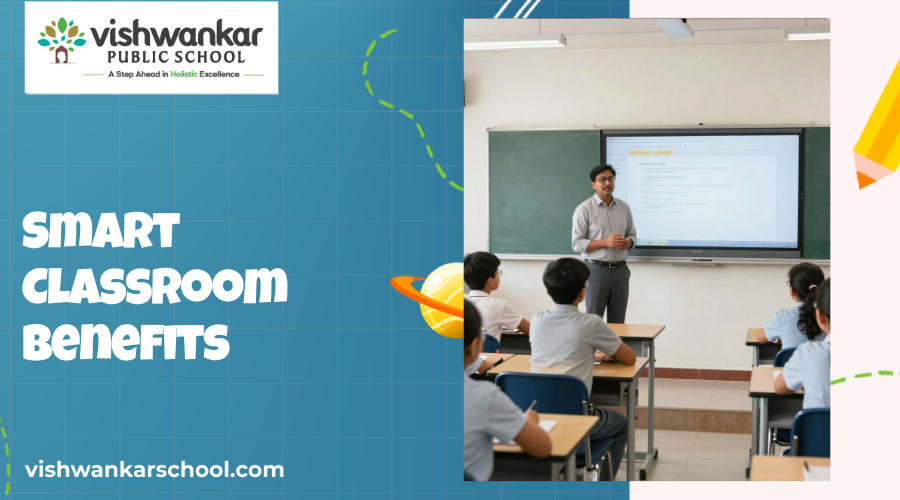
Education is rapidly evolving and traditional classrooms are changing to accommodate today’s students. Smart Classrooms aren’t spaces filled with computers; they are contemporary learning environments where technology and instruction work together to make teaching easier, more engaging, and more effective.
Enhanced with engaging interactive lessons and student-centric learning smart classrooms are now changing the way students learn and enjoy education. In this blog, we will discuss what is a smart classroom, importance of smart classroom, equipment employed and how they help students to perform better.
What is a Smart Classroom?
- A smart classroom is a technology-based digital class environment that improves students’ learning experiences.
- Rather than just relying on textbooks and lectures, educators can employ tools like smart boards for classroom, videos, interactive applications, and software for education to allow students to visualize and interact better with the concepts being taught.
- Instead of just reading about the solar system, they can watch planets orbiting the sun on a smart board. This active approach to learning helps students grasp ideas more quickly and retain them longer.
- Smart classrooms have the capacity to make students actively participate, ask questions and interact with their fellow students which brings fun to learning.
Importance of Smart Classrooms
Smart classrooms are more than just a trend; they have a real impact on education. Here’s why they are important:
- Better Understanding of Concepts : Visual aids, animations, and interactive content make it easier for learners to grasp difficult concepts. Science experiments, math problems and social studies events come alive in a way that text-books alone never can.
- Increased Engagement: Students remain attentive and engaged as the lessons are interactive.Learning is fun and students are motivated to participate with tools such as quizzes, videos, and digital exercises.
- Personalized Learning: With technology, students can take lessons at their own pace. They may review challenging subjects, do additional exercises or research on subjects they want to know more about.
- Skills Development: Smart classrooms foster students’ critical thinking, problem-solving, and digital literacy skills they will need in a 21st century.
- Support for Teachers - Teachers are able to more efficiently conduct their lessons, monitor student progress, and tailor instruction to the needs of individual students. In general the importance of smart classroom design is the creation of student environments that are motivated, confident, and prepared to tackle future challenges.
Types of Smart Classrooms
Not all smart classrooms are the same. There are three main types:
Standard Smart Classroom:
A teacher’s traditional classroom that has a computer, projector, and a whiteboard for presentations. It’s easier for students to engage with lessons and ask questions.
Intermediate Smart Classroom:
Consists of laptops, tablets, and other digital tools. Devices Students can share devices and access a combination of teacher-directed and some independent learning.
Student-led Smart Classroom:
All students have individual access to a device. Students can access lessons on their own with tablets, laptops or even virtual-reality tools. This configuration promotes motivated, personalized learning.
Smart Classroom Equipment
Contents of the smart classroom equipment list:
- Interactive Smart Board:Lesson, video and interactive game showing.
- Projectors and Screens
- Laptops or Tablets for Students
- Educational Apps and Software
- Digital Podiums for Teachers
- Video Conferencing Tools for remote learning
While the cost of a smart board for a classroom may seem high initially, the benefits for students learning make it a valuable investment for schools.
Advantages of Smart Classrooms
Smart classrooms bring many advantages that make learning more effective and enjoyable:
- Interactive Learning: Students don’t just read; they see, touch, and interact with the content. History lessons, for instance, can feature interactive maps and videos that animate events.
- Improved Academic Results: Students gain a better understanding of the topics and can practice with interactive tests and quizzes to help them do well in exams.
- Collaboration and communication: Group work, shared tasks and discussions encourage students to develop teamwork and problem-solving skills.
- Flexible learning: Students can study at their own pace, devote more time to difficult subjects, and delve into areas of special interest.
Smart classrooms also prepare students for modern careers by teaching digital literacy and technical skills, making them ready for the challenges of the 21st century.
How to Set Up a Smart Classroom
Setting up a smart classroom requires careful planning. Some key steps include:
- Installing smart boards for use in classrooms
- Providing students with tablets or laptops
- Access to educational apps, videos & interactive content
- Preparing teachers with the usage of technology in the classroom
- Creating lessons that mix digital and traditional instruction.
A smart class setup is designed in such a way that both teachers and students can make full use of the technology that allows you to provide effective and interesting teaching.
Conclusion
Smart classrooms are transforming student education. They turn lessons into interactive experiences, enable students to grasp difficult concepts, increase engagement, and teach skills required for future. Smart Classroom doesn’t just improve learning; it equips students to navigate a digital world. For modern learning environments, students who want to make the best cbse school in coimbatore is the perfect choice. These schools get on board smart classrooms to give students quality education in technology-oriented education.
FAQ’s
1. What Is The 5-3-3-4 Pattern Of Education?
The 5-3-3-4 pattern is part of India’s new education structure under the National Education Policy (NEP). It splits schooling into 5 years of foundation, 3 years of preparatory, 3 years of middle and 4 years of secondary. It is based more on skills and the learning is flexible.
2. Who Is The Provider Of Smart Classrooms In India?
There are several companies which offer smart classroom solutions in India including private edtech companies and government led initiatives. Schools and state governments also team with technology vendors to deploy smart classroom solutions.
3. What Is An Example Of A Smart Classroom?
A typical smart class comprises a digital board, a projector or an interactive panel, a computer, an internet access, and educational software. Teachers consult videos, animations and presentations to help make lessons more interesting and easier to understand.
4. What Is Smartclass Used For?
SmartClass is used to make the teaching and learning activities. With the help of visual, audio and digital content, teachers are able to better explain complex subjects, so students understand better and stay focused.
5. What Is The Difference Between A Smart Classroom And A Normal Classroom?
A regular classroom only needs a blackboard and some textbooks. A smart classroom utilizes digital tools such as smart boards, multimedia materials, and web resources to increase interactivity and technology use in the classroom.
6. How To Set Up A Smart Classroom?
In the case of the smart classroom, you need a digital board or a projector, a computer or a laptop, speakers, internet access, and educational software. Teachers need to be trained how to use the technology as well.
Previous