

What Is Montessori Education? A Complete Guide for Parents
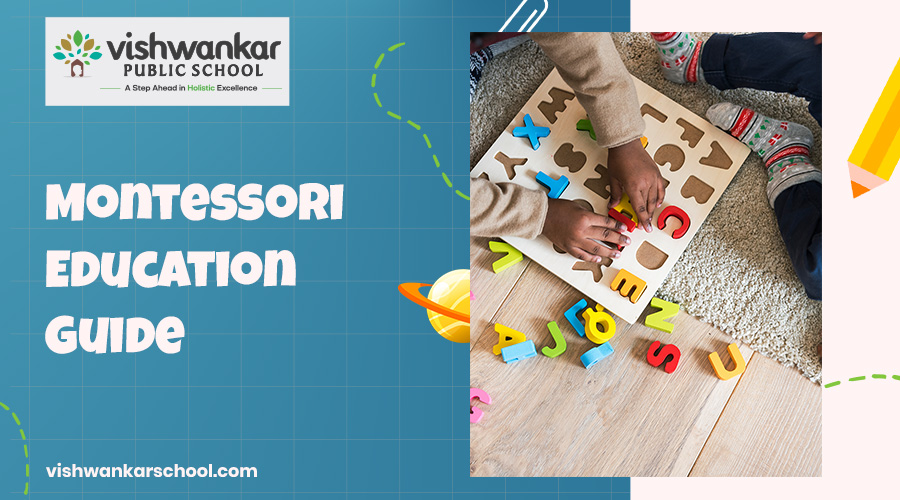
Montessori education transforms early childhood learning by emphasising child-centred techniques that promote independence, curiosity, and overall growth. Based on Dr. Maria Montessori’s scientific studies, this system transforms regular classrooms into prepared environments in which children grow organically. Understanding what Montessori education entails allows parents considering options such as Vishwankar Public School to make informed decisions that support lifelong learning.
What is Montessori Education?
Montessori education refers to an educational concept and teaching approach founded by Italian physician Maria Montessori in the early 1900s. The Montessori philosophy emphasises honouring the child’s natural psychological development stages, giving self-correcting materials, and allowing freedom within boundaries. Unlike rote learning, Montessori philosophy emphasises hands-on inquiry, mixed-age groups, and teachers serving as guides rather than lecturers.
Core Principles of the Montessori Method
The following principles serve as the foundation of the Montessori method:
- Child-Centred Learning: Children choose activities depending on their readiness and particular interests.
- Prepared Environment: Classrooms have low shelves, natural materials, and learning equipment that are appropriate for youngsters.
- Freedom Within Limits: Structured options reduce confusion while promoting decision-making.
- Mixed-Age Classrooms: Three-year groups promote peer teaching, leadership, and empathy.
- Hands-On Materials: Concrete tools (pink tower for size, sandpaper letters for phonics) help students understand abstract concepts.
- Teacher as Observer: Guides demonstrate lessons before stepping back to allow for autonomous inquiry.
Vishwankar Public School successfully blends these ideas across its Montessori division.
Montessori Curriculum Breakdown
The Montessori curriculum spans five key areas:
- Practical Life: Coordination, focus, and independence are developed through pouring, buttoning, and sweeping.
- Sensorial: Colour tablets, sound cylinders improve senses and discriminating abilities.
- Language: Sandpaper letters, moveable alphabet phonetic reading/writing begins at age three.
- Mathematics: Gold beads and spindle boxes concrete numerical notions before abstraction.
- Cultural: Geography puzzles, zoology cards, global awareness and science introduction.
No grades, assignments, or standardised tests progress is monitored through observation portfolios.
Benefits of Montessori Education
Research supports the following benefits of Montessori education:
- Academic Excellence: Up until the age of fifteen, Montessori students do better in reading and maths than their peers.
- Social Maturity: Mixed ages foster empathy and conflict resolution naturally.
- Executive function: Concentration spans increase from minutes to hours.
- Creativity: Compared to worksheets, open-ended materials encourage creativity.
- Independence: Children control their own time, supplies, and clean-up.
- Lifelong Learning: Intrinsic motivation replaces external rewards.
According to research, Montessori students have improved their social skills, emotional management, and flexibility.
Montessori Classroom Environment
Montessori classrooms differ fundamentally.
- Low furniture is accessible to all heights.
- Natural materials (wood, glass, metal) against plastic.
- Beauty and order clean, uncluttered areas
- Work rugs/circles define personal spaces.
- Gratitude and civility classes teach manners naturally.
- Three-hour work cycles enable deep concentration.
Vishwankar Public School preserves a child-sized environment that matches international Montessori standards.
Age Group Implementation
Montessori education serves:
- Nido (0-18 months): Movement and language immersion.
- Primary (18 months to 6 years): Introduction to the core curriculum
- Elementary (6-12 years): Cosmic education and research projects
- Adolescent (12-18 years): Real-world internships and economics
Montessori schools in Coimbatore, such as Vishwankar, excel at primary transitions.
Teacher Training & Qualifications
Authentic Montessori involves an intensive 9- to 12-month training for AMI/AMS-certified instructors. They master:
- Child Development Psychology
- Methods of presenting materials
- Observation record maintenance
- Parental education workshops
Vishwankar Public School hires fully certified Montessori teachers.
Daily Schedule Structure
A typical Montessori method of teaching day:
- 7:30-8:00: Arrival and grace/courtesy circle.
- 8:00-11:00: Uninterrupted Work Cycle #1
- 11:00-11:30: Snack and outdoor play.
- 11:30-1:30: Work Cycle #2
- 1:30-2:30: Lunch and rest.
- 2:30-3:30: Afternoon activities (music, art, and science).
No rush, children complete cycles at their own pace.
Integration with Traditional Systems
Vishwankar Public School combines the Montessori foundation with the CBSE upper primary to ensure academic rigour and holistic development. Transition lessons help children get ready seamlessly.
Parental Involvement
Montessori philosophy extends to the home:
- Observe without interruption.
- Follow the child’s lead during play.
- Limit toys to high-quality materials.
- Practise wait time and order routines.
- Attend the parent education seminars.
Vishwankar Public School organises monthly observation and instructional programs.
Measuring Success
Montessori curriculum success metrics:
- Concentration Duration (30+ minutes sustained)
- Independent work completion
- Willingness to collaborate among peers
- Joyful involvement at work
- Graceful conflict resolution.
- Self-correction use.
Longitudinal studies confirm greater results.
Common Misconceptions Addressed
1. Myth: “Too free-form, lacks academics”
Fact: Children read/write by 4-5 through concrete-phonetic progression.
2. Myth: “Expensive materials”
Fact: Durable wooden tools last for decades.
3. Myth: “Only for gifted children”
Fact: Serves diverse abilities through individualised pacing.
Starting Montessori Journey
Choosing programs:
- Verify AMI/AMS affiliation.
- Observe the genuine classroom (children working, not playing).
- Interview certified teachers.
- Review the parent testimonials.
- Visit Montessori schools in Coimbatore, such as Vishwankar.
Home preparation: Simplify the surroundings and promote practical living activities.
Long-Term Outcomes
Montessori alums demonstrate:
- Higher SAT scores.
- College graduation rates are two times those of their typical peers.
- Leadership Positions
- Social Entrepreneurship
- Adaptability in switching careers
The benefits of Montessori education are lifelong.
Vishwankar Public School Excellence
Vishwankar Public School demonstrates Montessori excellence through:
- Internationally trained faculty.
- Authentic materials import
- The teacher-child ratio is low at 1:15.
- Purpose-built environments.
- Successful transition to CBSE excellence.
Parents appreciate smooth, comprehensive development.
Also read: https://vishwankarschool.com/montessori-math-activities-for-preschoolers/
Conclusion
Montessori education is a scientifically established system that fosters autonomous thinkers, caring collaborators, and joyful learners. Montessori philosophy converts passive students into active discoverers by utilising the Montessori method’s concepts of freedom, respect, and prepared environments. Vishwankar Public School exemplifies accurate implementation, resulting in measurable academic, social, and emotional excellence.
The Montessori program prepares children for life mastery rather than just tests. From sensory refinement to cosmic citizenship, every material contributes to developmental preparation parents’ potential into purpose-built outcomes. Embrace Montessori and observe natural talent develop.
FAQs
1. What is the basic concept of Montessori education?
Montessori education emphasises self-directed learning, hands-on activities, and allowing students to learn at their own pace.
2. How is Montessori different from regular school?
Montessori encourages children to choose their own activities and learn freely, whereas traditional schools use a set curriculum and teacher-led instruction.
3. What is the main purpose of Montessori?
The primary goal is to foster a child’s independence, confidence, and joy of learning.
4. What are the 5 subjects in Montessori?
The five subjects are Practical Life, Sensorial, Mathematics, Language, and Cultural Studies.
6. Are LKG and Montessori the same?
No, LKG is part of a traditional school system, whereas Montessori is an alternative approach to early childhood education.
6. At what age is best for Montessori?
Montessori is best for children aged 2.5 to 6 years.
7. How long should kids stay in Montessori?
For children to fully benefit from the system, Montessori education typically lasts between 2 and 3 years.